Category: Personal Finance Management

Finance

Maximizing Your Tax Savings: Top Strategies for Small Business Owners

As a small business owner, tax season can be a challenging time. The complexity of tax regulations, the fear of missing out on valuable deductions, and the stress of filing accurate tax returns on time can all take a toll on your mental health and your bottom line. However, with proper planning and expert guidance, you can minimize your stress and maximize your tax savings. In this newsletter, we’ll provide you with valuable tips and strategies to help you do just that. The Importance of Record-Keeping One of the most crucial things you can do to save money on taxes


Finance

Maximize Your Wealth and Power: Master Fixed Asset Management

The importance of a fixed asset policy and tracking system As a small business owner, it’s essential to have a fixed asset policy to ensure consistent and accurate accounting of your fixed assets. Without a policy in place, it’s easy to set up different useful life depreciation types and salvage values for every asset, which can lead to confusion and errors. Asset classifications and useful life figures We recommend creating classifications of fixed assets, such as buildings, furniture and fixtures, vehicles, computer hardware, and production equipment. By assigning a standard useful life and depreciation method to each classification, you can

Finance

5 Simple Strategies to Reduce Stress During Tax Season

As we enter tax season, we understand that it can be a stressful time for many of you. Keeping track of deadlines, regulations, and ensuring that your financial records are accurate can seem overwhelming. That’s why we want to share some simple strategies to help make tax season more manageable and reduce your stress levels. Tax season doesn’t have to be a daunting experience. With the right preparation and mindset, you can reduce your stress levels and stay organized throughout the process. Create a Tax Planning Checklist Creating a tax planning checklist is a crucial step in staying organized and

Finance

Understanding Required Minimum Distributions (RMDs) and the SECURE 2.0 Act: What You Need to Know

As an IRA or tax-deferred retirement account holder, it’s crucial to know when you must start taking Required Minimum Distributions (RMDs). Under the SECURE 2.0 Act, RMD age requirements are changing: from 72 to 75 over the next decade. Individuals born between 1951 and 1959 must take RMDs at age 73, while those born in 1960 or later can wait until they turn 75. The purpose of RMDs is to ensure you use your retirement funds while you’re still alive, rather than using them as a tax-free estate planning tool for your heirs. RMD amounts depend on your age and

Finance

An Update: 2023 Health Insurance for S Corporation Owner

Here’s the latest update on health insurance developments for S corporation owners in 2023. As an S corporation owner with over 2% ownership, you can expect some positive news regarding your health insurance. To ensure that you comply with the Affordable Care Act (ACA) regulations and avoid the $100-a-day penalties, follow these steps: For regular employees, S corporations aren’t required to provide health insurance benefits. However, if they do, they must use an acceptable ACA plan, such as the qualified small employer health reimbursement arrangement (QSEHRA) or individual coverage HRA (ICHRA). The S corporation can reimburse more-than-2-percent owners for individually

What is a 1031 Exchange for Real Estate?

As you likely know, the Section 1031 tax-deferred like-kind exchange is one of the greatest wealth-building mechanisms for real estate investors. With Section 1031, you can avoid taxes on all your property upgrades during your lifetime and then pass the property to your heirs when you die. The heirs receive the property with a step-up to fair market value, and they can likely sell the property and pay no taxes. 1031 Exchange Overview The 1031 exchange, or like-kind exchange, has been around since the Revenue Act of 1921. Its purpose is simple: allowing you to swap a business asset without

Is Your Airbnb Rental Income Subject to Social Security & Medicare Taxes?

Do you owe self-employment tax (Social Security and Medicare Taxes) on Airbnb rental income? That’s a good question. In Chief Counsel Advice (CCA) 202151005, the IRS opined on this issue. But before we get to what the IRS said, understand that the CCA’s conclusions cannot be cited as precedent or authority by others, such as you or your tax professional. Even so, we always consider what the CCA says as semi-useful information, so here’s some analysis that goes beyond what the IRS came up with. The Exact Question To be specific, the CCA asks whether net income from renting out

Finance

The Inflation Reduction Act Will Punish Americans in Poverty

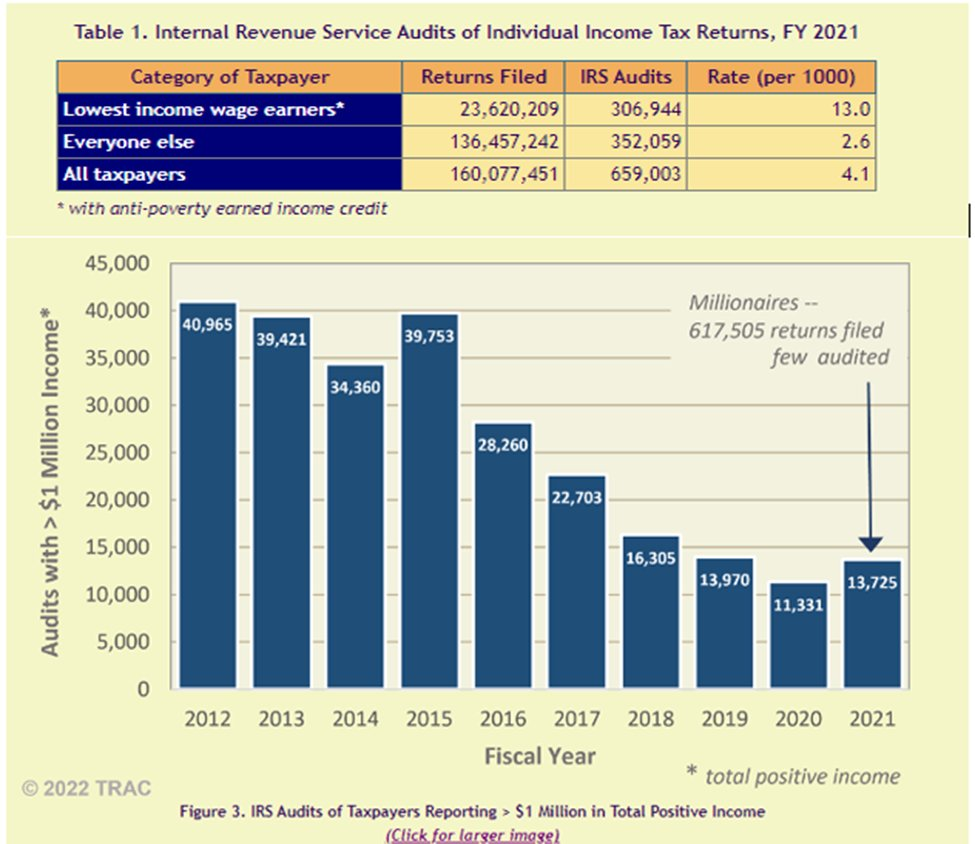
The Inflation Reduction Act (IRA) gave $45 Billion to the IRS to increase enforcement. The IRA will impact more Americans in poverty than American millionaires. The IRS can punish taxpayers prior to proving in court their guilt or liability through enforcement actions. To understand how the IRS can punish suspected taxpayers in noncompliance, we need to define what an Audit is. Audit= A systematic review or assessment of something. When most of you think of IRS enforcement you think of an In-Person Audit, led by Revenue Agents. The IRS also has something called a Correspondence Audit, to be supported by

Current College Students Qualify for Student Loan Forgiveness, Do You?

President Biden announced on Wednesday August 24th, 2022 the loan balances of millions of individuals who took out Federal student loans before July 2022 could fall by as much as $20,000. Additionally the Biden Administration is proposing a rule change that will forgive $12,000 in original loan debt if borrowers have paid on their loans for at-least 10 years. Below we’ll explain how his administrations plan would work under the information we currently have. Who qualifies for loan forgiveness? Based on what we currently know, individuals who are single and making up to $125,000 and those who file jointly making

Is Giving a Gift or Inheritance of Property, Taxable?

Citizens and residents of the USA are subject to federal taxation on income derived from any source, this includes compensation for services, business and investment income, gains from the sale of property, and income received from an interest in an estate or trust [1]. However, there is an exclusion from gross income for “the value of property acquired by gift, bequest, devise, or inheritance,” but that exclusion does not extend to “the income from” the property per §102 of the Internal Revenue Code (I.R.C.) [2]. This means that the beneficiary of a gift or bequest is not subject to income